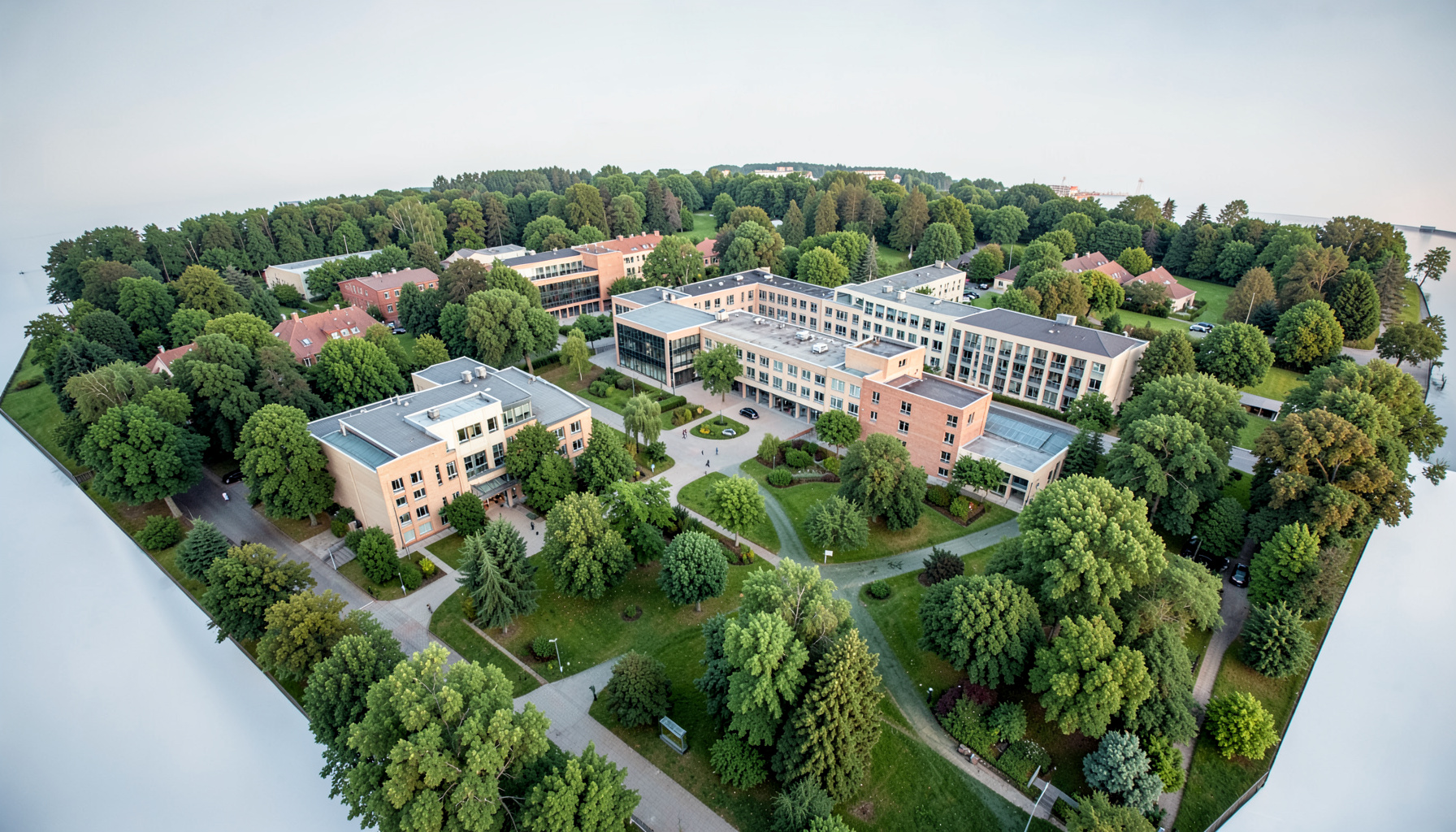
Stockholm University · Frescati Campus
Control
The 10th European Society for Literature, Science and the Arts conference, held in Stockholm from June 14 to 17, 2016, hosted by the Department of English at Stockholm University.
About the conference
The conference theme, Control, brought together scholars working across literature, science and the arts to consider the mechanisms that influence, direct or restrict people, organisms, processes, systems, motions and behaviours. Sessions and keynote lectures took place in the Geoscience building and Aula Magna on the Frescati Campus.
Keynote speakers included Lauren Berlant (University of Chicago), Alexander Galloway (New York University), Steven Hinchliffe (University of Exeter) and Paul Vanouse. The site chair was Frida Beckman of the Department of English, Stockholm University.
The European Society for Literature, Science and the Arts brings together scholars whose work crosses the boundaries between literary study, scientific inquiry and artistic practice. Its gatherings are built on the conviction that these fields have far more to say to one another than disciplinary habits usually allow, and that the most interesting questions tend to appear where they meet. Across the years the society has provided a recurring occasion for researchers at different career stages to test ideas in conversation with others who share a curiosity about how knowledge is made, represented and contested.
The conference theme of Control invited participants to think about the mechanisms that influence, direct or restrict people, organisms, processes, systems, motions and behaviours. Control is a word that travels easily between disciplines, appearing in engineering and in political theory, in biology and in literary criticism, and each usage carries its own assumptions about agency, order and resistance. By placing the term at the centre of the programme, the organisers encouraged contributors to examine how regulation operates at very different scales, from the molecular to the social.
Sessions and keynote lectures were held in the Geoscience building and Aula Magna on the Frescati Campus, a setting that lent the meeting a sense of occasion while keeping it rooted in the everyday life of a working university. The combination of lecture halls and shared spaces made room for formal presentations as well as the informal exchanges that often prove just as valuable. Participants moved between rooms and conversations throughout the days, carrying questions from one panel into the next and returning to themes raised earlier in the programme.
Keynote speakers from a range of institutions and disciplines framed the wider conversation, each approaching the question of control from a distinct angle. Their talks drew on contemporary thought about affect, media, science and technology, and the arts, opening lines of inquiry that resonated across the parallel sessions. Rather than closing the theme down, the keynote lectures tended to multiply the ways it could be understood, giving participants new vocabulary for problems they had already been circling in their own research.
A programme of this kind depends on the willingness of contributors to bring unfinished work into a public setting. Panels combined established scholars with newer voices, and the resulting discussions were often at their most productive when a paper unsettled an assumption the room had been taking for granted. The atmosphere was one of serious but generous debate, in which disagreement was treated as a resource rather than an obstacle, and in which questions from the floor regularly pushed a session in unexpected directions.
The society's interests are deliberately broad, and the conference reflected that breadth in the range of materials and methods on display. Literary texts sat alongside scientific writing, media artefacts and artistic projects, and the connections between them were traced through careful reading rather than forced synthesis. This pluralism is part of what makes the community distinctive: it does not ask participants to abandon their disciplinary training, but to bring it into contact with other ways of knowing and to notice what happens when they do.
An exhibition accompanying the conference extended the theme beyond the lecture hall, offering works that engaged questions of regulation, measurement and intervention through visual and material means. Encountering these pieces alongside the papers gave participants another way into the ideas under discussion, one less reliant on argument and more attentive to sensation, texture and form. Art has long been a place where the limits of control become visible, and the exhibition made that connection tangible for those who took the time to spend with it.
Looking back, the meeting in Stockholm stands as a record of a community thinking together about a term that resists easy definition. What remains after such an event is not only the formal programme but the networks of correspondence and collaboration it sets in motion, and the sense that a shared question can be held by many people at once without any of them settling it. The society continues to provide a home for that kind of ongoing, cross-disciplinary conversation, and for the scholars and artists who sustain it.
Registration for the 2016 conference has closed
Registration for the Stockholm conference closed ahead of the June 2016 dates. Questions about the conference can be sent to info@control2016.com.
Explore the conference
Theme, speakers, streams and practical details.
Key details
- ThemeControl
- DatesJune 14–17, 2016
- HostDepartment of English, Stockholm University, Sweden
- VenueGeoscience building and Aula Magna, Frescati Campus
- Site chairFrida Beckman, Department of English, Stockholm University
- Contactinfo@control2016.com
Getting to the venue
The campus has its own metro stop, “Universitetet,” four stops from Central Station (“T-Centralen”) on the red line. Bus numbers 40, 70, 540 and 670 also serve the university, and public transport tickets were available from newsagents and SL ticket offices.
Hotels listed for the conference included Scandic Anglais, Hotell Drottning Kristina, Elite Eden Park Hotel, Story Hotel, Hotel Wellington, Scandic Park and Hotel Esplanade.
Contact
Send a message to the conference organisers.